
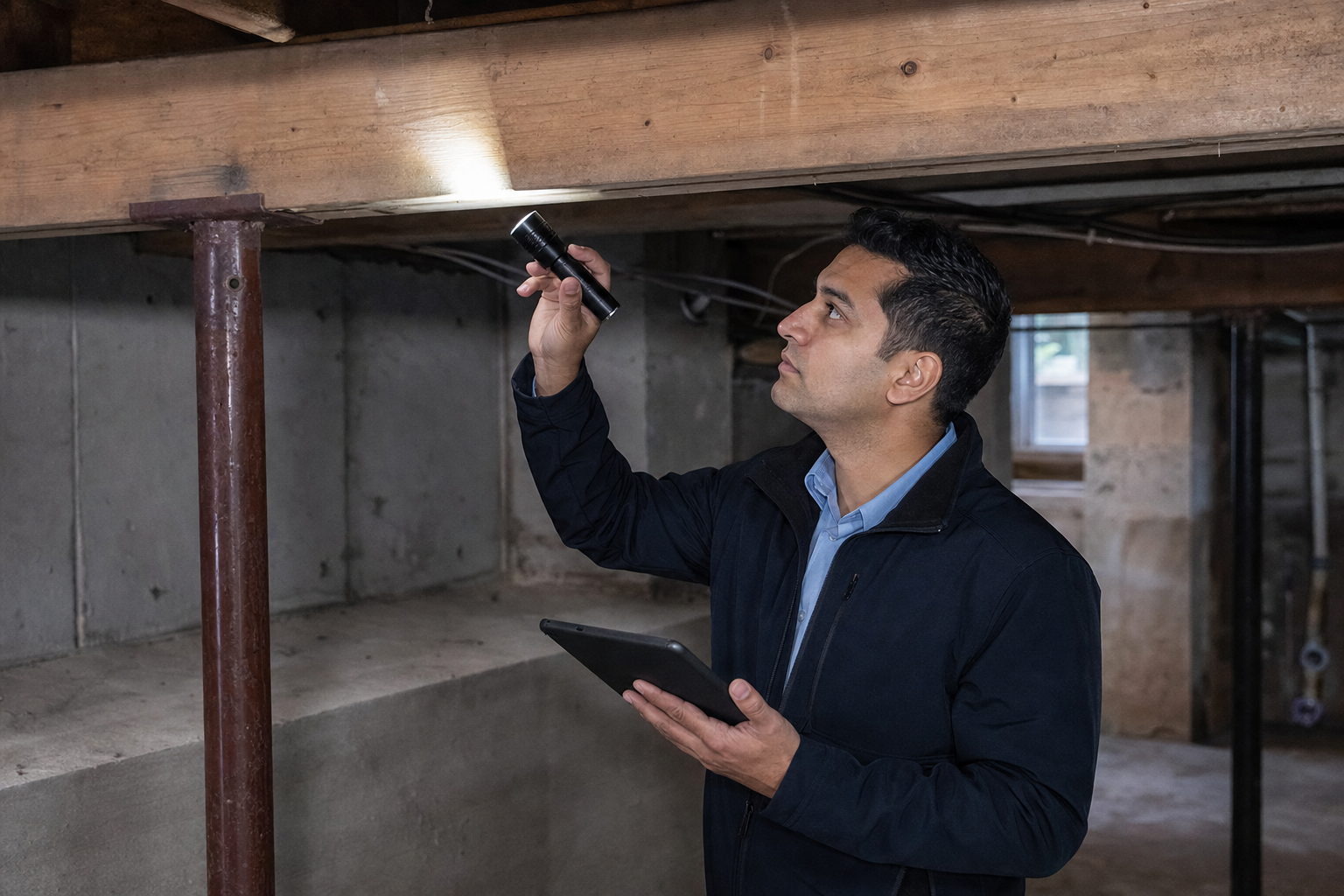
What Is Included in a Residential Structural Inspection?
Table of Contents
- What a Residential Structural Inspection Is
- What Elements Are Assessed
- Foundation and Basement Assessment
- Floor Framing and Beam Assessment
- Wall and Structural Connection Assessment
- Roof Framing Assessment
- What the Written Report Includes
- Toronto-Specific Considerations
- What to Do Next
- When to Call a Structural Engineer
- Frequently Asked Questions
What a Residential Structural Inspection Is
A residential structural inspection is a professional engineering assessment of the load-carrying elements of a home, performed by a PEO-licensed structural engineer and resulting in a written report with photographs, findings, and recommendations. It differs from a general home inspection in two fundamental ways: it focuses specifically on structural elements rather than all building systems, and it produces an engineering opinion, not just a list of observations, that carries professional liability. Toronto homeowners typically request structural inspections before purchasing a home with concerns, before planning a major renovation, or after observing symptoms of structural distress.
Key Takeaways
- A residential structural inspection covers foundation, floor framing, load-bearing walls, beams, columns, and accessible roof structure.
- The written report provides an engineering opinion on severity, cause, and recommended action, not available from a general home inspection.
- The report is accepted by lenders, insurers, real estate lawyers, and Toronto Building.
- Most residential structural inspections take one to three hours on site.
What Elements Are Assessed
A residential structural inspection covers all accessible load-carrying elements of the building. Cosmetic finishes, mechanical systems, electrical, and plumbing are outside the scope. The engineer focuses on:
- Foundation walls and footings (full perimeter, interior, and exterior where accessible)
- Basement floor framing: beams, posts, and joists visible from below
- Load-bearing walls: identification, condition, and evidence of any modification
- Above-grade floor framing accessible through basement ceiling
- Connections between structural elements at critical bearing points
- Accessible roof framing through attic hatch where available
- Evidence of previous structural modifications, repairs, or unpermitted work
Foundation and Basement Assessment
The foundation receives the most detailed attention. The engineer examines every accessible foundation wall surface and classifies each crack by type (vertical, diagonal, horizontal, stair-step), width, length, and whether one face is displaced relative to the other. They assess whether cracks appear active (growing) or dormant (stable) and review drainage conditions and signs of water infiltration.
The engineer also reviews the basement beam and post system: beam sizes versus spans, post conditions at top and bottom, any visible deterioration, and signs of informal modification. See foundation inspections for the specific foundation inspection service.
Floor Framing and Beam Assessment
From the basement, the engineer reviews the underside of the first-floor framing, joist sizes and conditions, beam bearing length, and any notching, boring, or modification to joists that may have reduced their capacity. They assess floor levelness (which reflects overall settlement and deflection patterns) and identify any areas of notable bounce or deflection.
Wall and Structural Connection Assessment
The engineer identifies walls that are likely load bearing and reviews their condition. In older Toronto homes with masonry walls, this includes assessing mortar joint condition and any cracking in the masonry fabric. Visible connections, beam-to-column, joist-to-beam, are assessed for adequacy of bearing length and hardware condition.
Roof Framing Assessment
Where attic access is available, the engineer reviews rafter sizes and spacing, ridge member conditions, collar ties, and any signs of spreading or deterioration. On complex roofs with dormers, valleys, or previous additions, particular attention goes to structural continuity at these junctions. See Can a Structural Engineer Help With Sagging Floors or Roofs? for what sagging roof conditions involve.
What the Written Report Includes
The structural engineer's written report documents:
- A description of the property and inspection scope
- Findings for each structural element assessed, with photographs
- Severity classification for each finding (cosmetic, minor, moderate, significant)
- Assessment of whether conditions are active or stable
- Engineering opinion on the likely cause of each finding
- Recommended actions (monitor, seal, repair, engage contractor, further investigation required)
- The engineer's signature and PEO stamp
This report is a professional engineering document that can be shared with lenders, insurers, real estate lawyers, and contractors. See structural inspections for how the inspection service is structured.
Toronto-Specific Considerations
Toronto's housing diversity means no two structural inspections are identical. A pre-1920 Annex Victorian with a rubble stone foundation presents different assessment considerations than a 1960s Scarborough bungalow on a poured concrete foundation, which in turn differs from a modern semi-detached in Liberty Village. An engineer experienced in Toronto's range of construction types assesses each accurately rather than applying a one-size-fits-all checklist.
What to Do Next
- Book a structural inspection before purchasing a Toronto home with observed structural concerns.
- Request a structural inspection before beginning a major renovation in an older Toronto home.
- If you have observed warning signs (cracking, deflection, sticking doors), book an inspection before the signs worsen.
- Retain the written report with your property records for future reference.
When to Call a Structural Engineer
Call a structural engineer for a residential inspection when:
- A general home inspection has recommended a structural specialist
- You are considering purchasing a Toronto property built before 1960 or with disclosed structural concerns
- You plan a major renovation and want to understand existing structural conditions
- You have noticed any of the warning signs described in What Are the Signs of Structural Damage in a House?
Frequently Asked Questions
Q: How long does a residential structural inspection take in Toronto?
Most residential inspections take one to three hours on site depending on property size and number of concerns. The written report typically follows within two to three business days.
Q: Is a structural inspection required when buying a Toronto home?
It is not universally required, but it is strongly recommended when a home inspector has flagged structural concerns, the property is older than 50 years, or any signs of foundation or framing distress are observed.
Q: What does a structural inspection cost in Toronto?
Fees vary by property size and scope. Request a free quote for project-specific pricing.
Q: Can I use a structural inspection report in a real estate price negotiation?
Yes. The written report documents conditions with engineering analysis, which can support a price adjustment request where repairs are identified.
Q: How is a structural inspection different from a structural assessment?
The terms are often used interchangeably. Both refer to an engineering evaluation of structural elements. Some firms distinguish between a narrower "assessment" (focused on one specific concern) and a broader "inspection" (covering the full structural system). Confirm the scope with the engineer at the time of booking.
Ready to get a full picture of your Toronto home's structural condition? Get My Free Quote for a residential structural inspection.