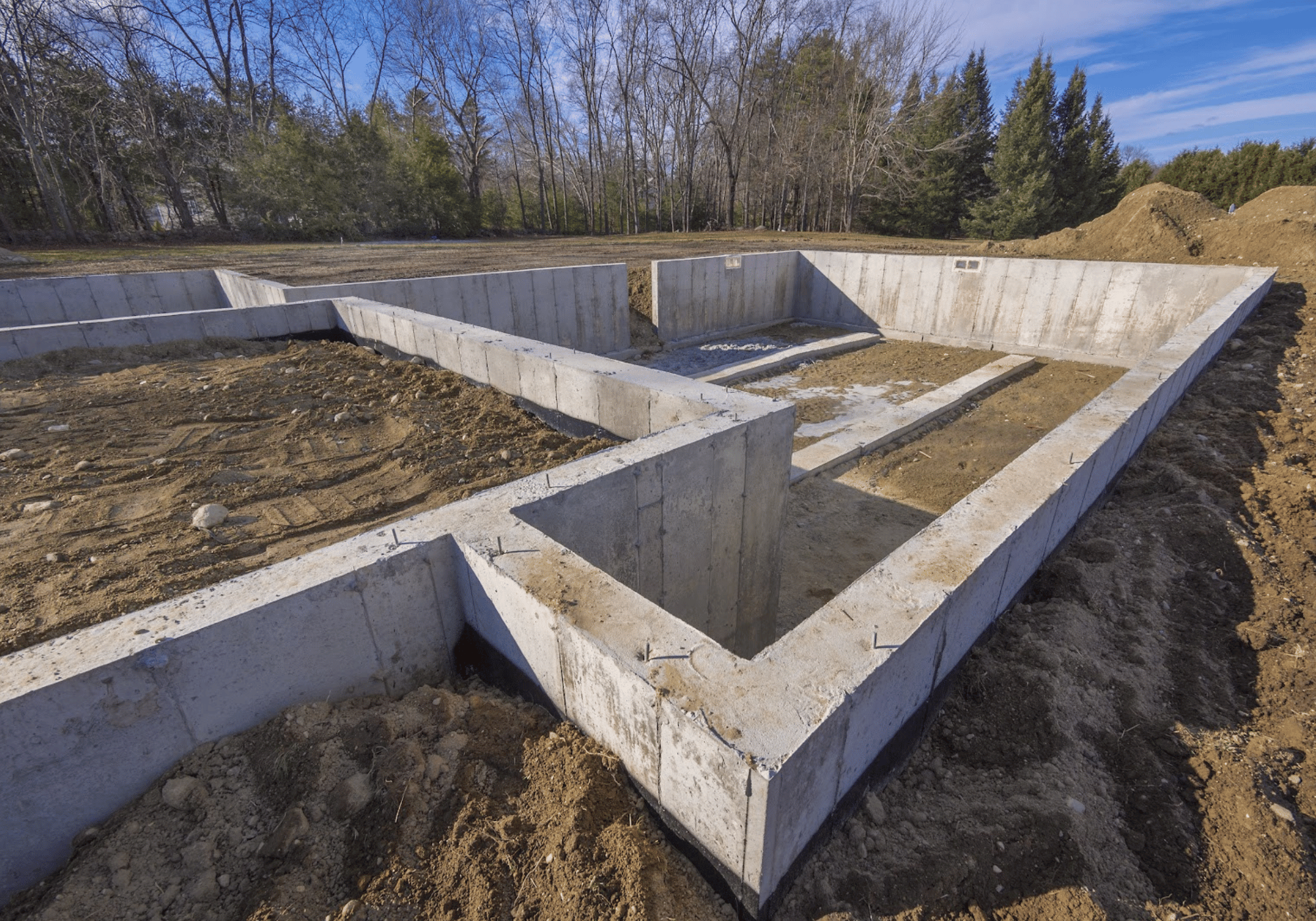
Build on a stable foundation with engineered residential foundation designs in Toronto. We help prevent settlement, structural movement, drainage issues, and costly construction problems.
Your home's foundation is the most important structural element it has. Every wall, floor, beam, and roof ultimately depends on the foundation performing correctly — transferring the full weight of the structure safely into the ground below.
When something goes wrong with a foundation, the effects rarely stay contained. Cracks appear in walls. Doors and windows stop closing properly. Floors begin to slope. Water finds its way in. And in more serious cases, the structure above begins to move in ways that are expensive and complicated to reverse.
Toronto homeowners deal with foundation concerns more often than in many other cities. The age of the housing stock, local soil conditions, freeze-thaw cycles, and the city's history of basement modification all contribute to foundation issues that require professional evaluation and, in many cases, engineering intervention.
Toronto Structural Engineers provides residential foundation engineering services for homeowners across Toronto, ON — from initial assessment and crack evaluation through full foundation repair and underpinning design. We give you clear answers about what's happening with your foundation and what needs to be done about it.
Foundation issues don't happen randomly. In Toronto, several factors combine to make residential foundations more susceptible to movement, deterioration, and distress than in many other regions.
A significant portion of Toronto's residential properties were built before 1960. Many of these homes have foundations constructed from rubble stone, brick, or concrete block — materials that were standard at the time but that behave very differently from modern poured concrete. These older foundation types are more susceptible to water infiltration, mortar deterioration, and movement over time.
Toronto's soils vary considerably across the city — from sandy fill in some areas to dense clay in others. Clay soils in particular are problematic for foundations because they expand when wet and shrink when dry. This seasonal movement exerts lateral pressure on foundation walls and can cause progressive cracking and displacement over years and decades.
Toronto's climate subjects foundations to significant freeze-thaw stress each year. Water that enters cracks or porous masonry expands when it freezes, widening existing cracks and creating new ones. Over many seasons, this process can cause substantial deterioration in foundations that were originally sound.
Many Toronto homes have had basement modifications over the decades — some with proper engineering and permits, others without. Underpinning performed without engineering review, drainage changes that alter water behaviour around the foundation, and structural modifications to basement walls can all create conditions that affect foundation performance years later.
Understanding these Toronto-specific factors is essential to diagnosing foundation problems correctly and designing repairs that address root causes rather than just symptoms.
Our foundation engineering services cover the full scope of residential foundation concerns — from evaluation and diagnosis through repair design and construction support.
Cracks are the most visible sign of foundation distress, but not all cracks are equal. The location, orientation, width, and pattern of a crack all provide information about its cause and structural significance. Horizontal cracks in block or masonry walls are often the most serious, indicating lateral pressure from surrounding soil. Vertical cracks in poured concrete are commonly related to concrete shrinkage and may be less structurally significant — though they still require evaluation. Diagonal or stair-step cracks often indicate differential settlement. We assess all crack types, determine their cause, and provide engineering recommendations based on actual conditions rather than assumptions.
A foundation wall that has begun to bow inward is under lateral pressure from the soil outside — and the condition typically worsens over time if not addressed. In Toronto homes, this is most commonly seen in concrete block and older masonry foundations. Engineering solutions range from wall anchoring systems and carbon fibre reinforcement to full wall reconstruction depending on the severity of the displacement. We assess the degree of movement, determine the appropriate intervention, and prepare engineering drawings for the chosen repair approach.
When a foundation settles unevenly — one corner dropping more than another, or one section of wall moving independently — the effects ripple through the entire structure. Floors slope, walls crack, and door frames rack out of square. Settlement can result from soil consolidation, loss of bearing capacity, erosion of material beneath footings, or inadequate original footing design. We evaluate settlement patterns, assess the underlying cause, and provide engineering recommendations for stabilization and repair.
Many of Toronto's oldest homes sit on rubble stone or brick foundations that are over a century old. These foundations were built without the waterproofing, drainage, and engineering standards that govern construction today. Over time, mortar deteriorates, stones shift, and structural capacity decreases. We assess the condition of older foundation systems, identify areas of concern, and provide engineering recommendations for repair, reinforcement, or replacement where required.
Underpinning — the process of extending a foundation deeper into the ground to allow a basement floor to be lowered — is one of the most common foundation engineering projects in Toronto. Homeowners pursue it to create full-height basement living space, legal secondary suites, or additional storage. Underpinning must be carefully engineered to maintain foundation stability throughout the excavation process. We design pit underpinning and bench footing systems that are safe, code-compliant, and suited to your home's specific foundation conditions.
When a home addition is planned, the existing foundation must be evaluated to determine whether it can support the additional load — and whether it needs to be extended or upgraded. In many Toronto homes, particularly older ones, the original footings were sized for the original structure only. Adding a second storey or rear extension without engineering the foundation implications is a common source of long-term structural problems. We assess foundation capacity and design the upgrades required to support your addition safely.
While waterproofing itself is not a structural engineering service, water infiltration through foundation walls has direct structural consequences — particularly in masonry foundations where repeated wetting and drying accelerates deterioration. We assess the structural implications of water infiltration, provide engineering input for projects involving exterior excavation and waterproofing, and coordinate with waterproofing contractors to ensure structural requirements are met during excavation and membrane installation.
Foundation problems are frequently misdiagnosed — either understated by contractors eager to perform low-cost repairs, or overstated by those selling expensive solutions. A proper engineering assessment gives you an independent, qualified evaluation of what is actually happening with your foundation.
Our foundation assessments are performed by licensed structural engineers, not sales representatives. We examine the foundation directly, review all visible evidence of distress, and provide written findings that explain the condition in clear terms — including what requires immediate attention, what should be monitored, and what can wait.
For Toronto homeowners who have noticed cracks, water, or movement, a foundation assessment is the right first step before committing to any repair approach. It ensures that the work you invest in actually addresses the problem — and that you're not spending money on repairs that won't hold.
Toronto's housing policies actively encourage the creation of legal secondary suites — basement apartments, garden suites, and laneway houses. For the majority of Toronto homes where basement ceiling height is insufficient for a legal suite, underpinning or floor lowering is the only structural solution.
We provide complete foundation engineering for basement renovation and secondary suite projects, including:
Underpinning is one of the higher-risk residential foundation operations — the stability of the entire structure depends on the sequence and quality of execution. Proper engineering design and construction oversight are not optional on these projects.
We provide objective evaluations of foundation conditions — not assessments designed to sell a specific repair product or system. Our findings reflect what we observe and what the engineering evidence supports, giving you an honest basis for decisions about your home.
We work on Toronto homes every day. Our engineers are familiar with the full range of foundation types found in Toronto's housing stock — from century-old rubble stone to mid-century block to modern poured concrete — and with the failure modes and repair approaches specific to each.
All foundation engineering packages are stamped by a licensed Professional Engineer and prepared to meet Toronto Building's submission standards. We know what the City requires for foundation work and prepare our drawings accordingly.
We explain what we found, what it means, and what we recommend — in language that makes sense to homeowners, not just engineers. We don't minimize problems or overstate them. We give you an accurate picture so you can make informed decisions.
Foundation work is complex, and field conditions don't always match what was visible during the assessment. We stay engaged during construction — reviewing conditions as they're exposed, answering contractor questions, and providing revised guidance when unexpected situations arise.
Foundation work is among the most heavily regulated residential construction activity in Toronto. Our engineers understand the OBC requirements for foundation design, the City's permit submission standards, and what inspectors look for at each stage of foundation work.
We discuss the foundation concerns you've observed, the history of the home and any previous repairs, and your goals — whether that's a repair assessment, underpinning for a renovation, or engineering support for a planned addition. This conversation helps us scope the work accurately.
One of our engineers visits your home to inspect the foundation directly. We examine all accessible foundation walls, assess crack patterns, check for evidence of movement or water infiltration, and review conditions in the crawl space or basement where relevant. We also assess the structure above the foundation for signs of foundation-related distress.
We analyze the assessment findings, identify the cause and structural significance of any foundation distress, and determine the engineering requirements for your project — whether that's a repair design, a monitoring recommendation, or a full underpinning package.
For assessment projects, we provide a written engineering report documenting our findings, the structural significance of observed conditions, and our recommendations. This report is prepared by a licensed Professional Engineer and can be used to support permit applications, real estate transactions, or contractor tendering.
For projects requiring engineering design — underpinning, wall repairs, foundation upgrades — we prepare stamped structural drawings and specifications. Drawings are formatted to Toronto Building's permit submission requirements and include all details needed for contractor execution.
We assist with building permit submissions for foundation work and respond to technical comments from City plan reviewers. Foundation permit applications often receive detailed technical review, and we prepare our drawings to anticipate and address common reviewer concerns.
During foundation repair or underpinning work, we conduct site reviews at key construction stages. We verify that work is proceeding in accordance with the engineering drawings and address any field conditions that require design adjustment.
We provide foundation engineering services for all residential property types across Toronto — detached homes, semi-detached homes, townhouses, row houses, and low-rise residential buildings.
Our engineers have direct experience with every foundation type common to Toronto's housing stock:
Understanding which foundation type your home has — and the failure modes specific to that type — is the starting point for every foundation assessment we conduct.
We work with homeowners throughout the City of Toronto on foundation assessments, repair engineering, and underpinning projects. Our engineers are familiar with the soil conditions, foundation types, and permit processes across every part of the city.
We regularly work in North York, Scarborough, Etobicoke, East York, and Downtown Toronto, as well as in neighbourhoods including The Beaches, Leaside, Leslieville, Rosedale, High Park, Forest Hill, Riverdale, Danforth, Lawrence Park, and Bloor West Village.
Older neighbourhoods across the city — where pre-war and early post-war homes are most concentrated — tend to have the highest rate of foundation concerns. We understand the structural history of these areas and the specific challenges that come with engineering foundation solutions for homes that were built generations ago.
Not all foundation cracks are structurally significant, but all should be evaluated by a professional. The most concerning cracks are horizontal cracks in block or masonry walls — these indicate lateral soil pressure and can progress to wall failure if left unaddressed. Diagonal or stair-step cracks often point to differential settlement. Vertical cracks in poured concrete are frequently related to shrinkage and may be less urgent, though they can allow water infiltration. Width, length, displacement, and whether the crack is active or stable all factor into the assessment. The only reliable way to evaluate a crack's significance is through an engineering inspection.
It depends on what the problem actually is. Water infiltration through a foundation wall may be primarily a drainage and waterproofing issue — or it may be a symptom of structural cracking that needs engineering attention first. If you have visible cracks, wall movement, or structural concerns alongside the water problem, start with a structural engineer. We can identify whether there are structural issues that need to be addressed before waterproofing is applied, and coordinate with waterproofing contractors as needed.
Underpinning is the process of excavating beneath an existing foundation and extending it deeper into the ground — effectively deepening the basement. It's used when homeowners want to lower the basement floor to create additional ceiling height for a legal suite or finished living space. Whether your home needs underpinning depends on your existing foundation depth, the target ceiling height, and the type of foundation your home has. We assess these factors and confirm whether underpinning is required — and if so, which approach is appropriate for your specific conditions.
Yes. Unaddressed foundation issues are among the most significant factors that affect residential property transactions in Toronto. Buyers and their inspectors frequently identify foundation concerns, and unresolved problems can delay or derail a sale. An engineering assessment provides documented, professional findings that can support disclosure requirements and, where repairs are completed, confirm that issues have been properly addressed. If you're planning to sell and have foundation concerns, we recommend an assessment before listing.
No. A home inspection is a general visual review of a property conducted by a home inspector. A structural foundation assessment is performed by a licensed structural engineer and involves a more detailed engineering evaluation of foundation conditions, crack patterns, structural performance, and the causes of any observed distress. Home inspectors can identify visible signs of foundation concern, but they are not qualified to determine structural significance, cause, or engineering recommendations. When foundation issues are identified in a home inspection, an engineering assessment is the appropriate follow-up.
The site visit for a residential foundation assessment typically takes one to two hours, depending on the size of the home, the complexity of the conditions, and the accessibility of the foundation. A written engineering report is generally provided within five to ten business days of the site visit. If you require an expedited turnaround — for a real estate transaction, for example — let us know at the time of booking and we will do our best to accommodate your timeline.
Yes. This situation is more common than most homeowners realize in Toronto. If previous foundation work was performed without engineering or permits, we can assess the existing conditions, evaluate the quality and adequacy of the work as built, and prepare engineering drawings to bring the modification into compliance. Addressing this proactively — rather than waiting for it to surface in a home inspection or sale — is always the better approach.
Foundation problems don't get better on their own. Cracks widen. Walls move. Water finds new paths. And the longer a structural foundation issue goes unaddressed, the more complex and costly the solution becomes.
Toronto Structural Engineers provides residential foundation engineering that gives homeowners the honest, expert assessment they need — and the engineering drawings and construction support to follow through on whatever the assessment reveals.
Contact us today to request a foundation assessment or get a quote for foundation engineering services. We respond promptly, assess thoroughly, and communicate clearly — so you know exactly where your foundation stands and what your options are.
Your home is only as solid as what it stands on. Make sure your foundation has the engineering it deserves.