
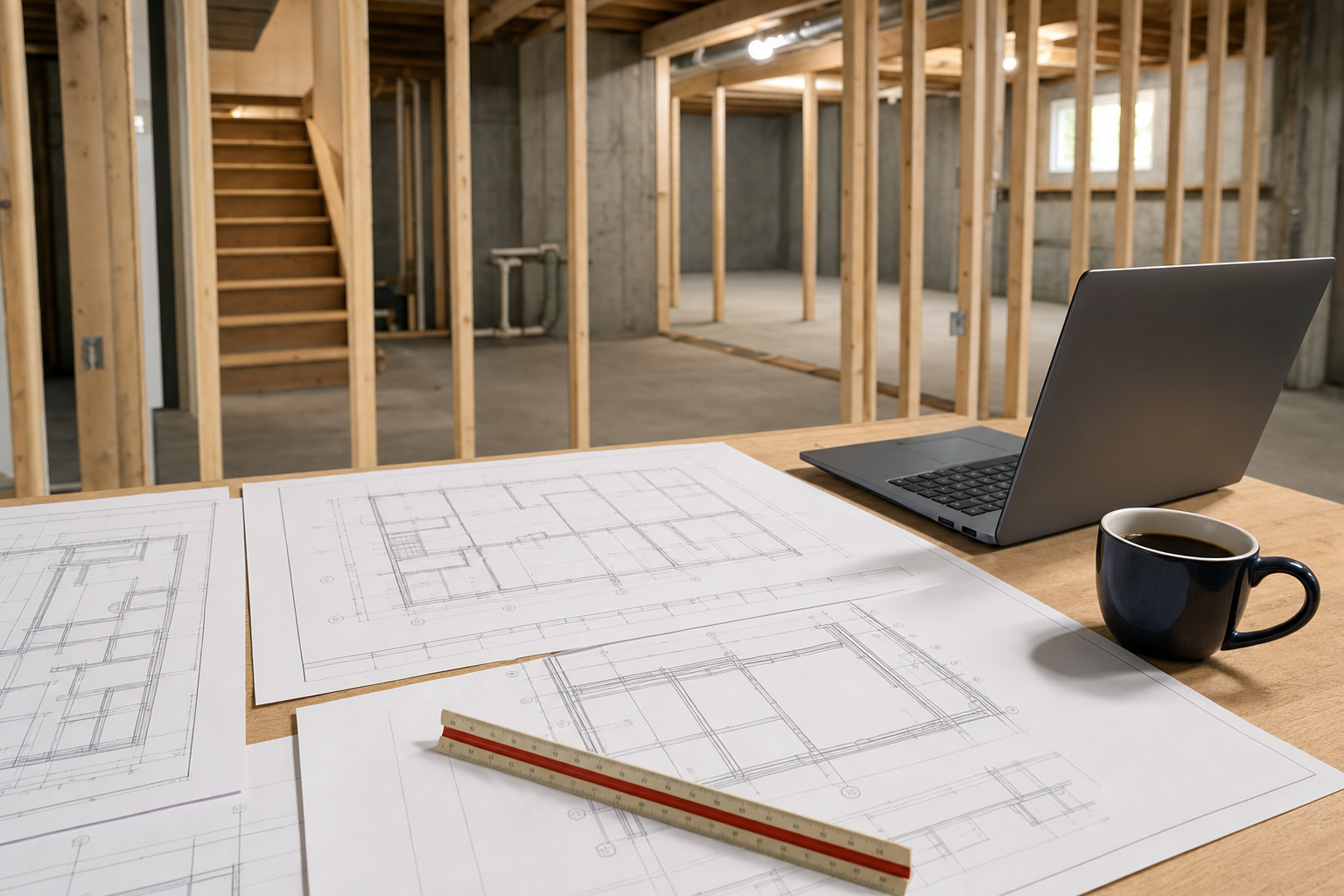
Do I Need Structural Drawings for a Basement Renovation in Toronto?
When Structural Drawings Are Required for a Basement Renovation
Whether your basement renovation requires structural drawings depends entirely on whether the project touches structural elements. Finishing a basement with drywall, flooring, and lighting on an existing unaltered structure typically does not require structural engineering. Adding a bathroom, installing a beam, lowering the floor through underpinning, cutting a new egress window, or removing a structural post absolutely does. In Toronto, any basement project that triggers a building permit will require stamped structural drawings as part of the permit package.
Key Takeaways
- Cosmetic basement finishing on an existing structure generally does not require structural drawings.
- Any structural modification requires stamped engineering drawings and a permit.
- Toronto Building will not issue a structural permit without drawings stamped by a PEO-licensed Professional Engineer.
- Confirm your specific scope requirements with Toronto Building or a structural engineer before beginning any work.
Table of Contents
- When Structural Drawings Are Required for a Basement Renovation
- Basement Projects That Always Need Engineering Drawings
- Basement Projects That Generally Do Not Need Engineering Drawings
- What Structural Drawings for a Basement Include
- The Permit Process for Structural Basement Work in Toronto
- Toronto-Specific Considerations
- What to Do Next
- When to Call a Structural Engineer
- Frequently Asked Questions
Basement Projects That Always Need Engineering Drawings
Basement underpinning (lowering the floor): The most drawing-intensive basement project type. See Do I Need a Structural Engineer for Underpinning in Toronto? for the full process.
New egress window or walkout entrance: Cutting a new opening in a concrete or masonry foundation wall requires engineering of the opening, a structural lintel, and any impact on adjacent footings.
Beam installation or replacement: Installing a new beam in the basement ceiling requires beam sizing calculations and connection details.
Post and column removal or relocation: Basement posts carry loads from above. Removing or moving one requires engineering to confirm the beam above can handle the revised span.
Structural slab modifications: Cutting and replacing the slab to lower specific sections or install drains requires engineering when the modifications affect the structural system. See structural foundations for how engineers approach slab and footing work.
Basement Projects That Generally Do Not Need Engineering Drawings
Framing non-structural partition walls for room division, drywalling and finishing existing framing, installing flooring over the existing slab, and pot light and electrical rough-in (separate electrical permit applies) generally do not require structural drawings.
Even for cosmetic projects, if you have concerns about existing structural conditions, a structural inspection before beginning finishing work is advisable. See Can a Structural Engineer Inspect Foundation Cracks in Toronto Homes? for what an assessment covers.
What Structural Drawings for a Basement Include
For a basement renovation requiring structural engineering, the drawing package typically includes a foundation plan showing existing and proposed conditions, an underpinning plan (if applicable) with sequential bench layout and inspection hold points, structural framing notes for any new beams, and general structural notes. See structural drawings for a complete description.
The Permit Process for Structural Basement Work in Toronto
Toronto Building requires a building permit before any structural basement work begins. The permit package includes the stamped structural drawings, a permit application form, and for larger projects, architectural drawings showing the revised layout. Inspections are required at key stages, and for underpinning, an inspector reviews each excavated section before concrete is poured. Confirm requirements with Toronto Building or a licensed Professional Engineer.
Toronto-Specific Considerations
Toronto's high proportion of semi-detached and row homes means many basement renovation projects involve a shared (party) footing with the adjacent property. Any underpinning on a semi-detached Toronto home requires a party wall agreement and coordinated engineering that protects the neighbouring foundation throughout construction.
What to Do Next
- Define your basement renovation scope in detail, noting every element that might touch structure.
- Consult a structural engineer to confirm whether your scope triggers structural drawings and a permit.
- Obtain stamped drawings before submitting the permit application.
- Do not begin any structural work before the permit is issued.
When to Call a Structural Engineer
Call a structural engineer for a basement renovation when you are planning underpinning, beam work, post changes, or new openings in the foundation wall, or when your contractor has mentioned that engineering drawings are needed.
Frequently Asked Questions
Q: Do I need a permit to finish an unfinished basement in Toronto?
If the work is purely cosmetic, a permit may not be required for the structural work, but a permit may still be required for plumbing or electrical rough-in. Confirm with Toronto Building for your specific scope.
Q: How much do structural drawings for a basement renovation cost in Toronto?
Fees vary by scope. Underpinning drawings are more involved than a single beam design. Request a free quote for project-specific pricing.
Q: Can I use drawings from a neighbour's underpinning project for my project?
No. Structural drawings are project-specific and must be stamped for your specific property address.
Q: What is a party wall agreement and do I need one for a Toronto basement renovation?
A party wall agreement is a legal document between adjacent property owners in semi-detached or row homes that protects both parties' structures during construction on or near the shared wall. For underpinning in Toronto semi-detached homes, it is standard practice.
Q: How long does underpinning engineering take before work can begin?
The engineering and drawing phase typically takes one to three weeks depending on complexity. Add the Toronto Building permit processing time on top of that.
Planning a structural basement renovation in Toronto? Get My Free Quote from Toronto Structural Engineers.