
Can a Structural Engineer Inspect Foundation Cracks in Toronto Homes?
What a Structural Engineer Looks for in a Foundation Crack
Yes, a structural engineer is the correct professional to inspect and assess foundation cracks in Toronto homes. Unlike a home inspector, who observes and documents conditions, a structural engineer applies engineering analysis to determine the cause, severity, and structural significance of each crack and provides a written report with professional liability.
Key Takeaways
- A structural engineer provides a professional engineering opinion on crack severity and cause, which a home inspector cannot.
- The written report carries PEO professional liability and is accepted by lenders, insurers, and Toronto Building.
- Crack type, orientation, width, displacement, and whether the crack is active or dormant are the key assessment criteria.
- Most foundation cracks in Toronto homes are manageable, the engineer's job is to tell you exactly what you are dealing with.
Table of Contents
- What a Structural Engineer Looks for in a Foundation Crack
- Why a Structural Engineer Is the Right Professional for This
- Types of Foundation Cracks and Their Significance
- What the Inspection Involves
- What the Written Report Includes
- Toronto-Specific Considerations
- What to Do Next
- When to Call a Structural Engineer
- Frequently Asked Questions
Why a Structural Engineer Is the Right Professional for This
Foundation cracks can be cosmetic, minor, moderate, or serious structural concerns. The distinction requires engineering judgment, not just observation. A home inspector can note a crack and recommend further investigation. Only a structural engineer can deliver the further investigation, analyzing load paths, soil conditions, crack geometry, and structural implications, and produce a signed report that carries professional weight.
For any real estate transaction where foundation cracks have been disclosed or observed, a structural engineer's report protects both buyer and seller by documenting conditions precisely. See foundation inspections for the full scope of what is covered.
Types of Foundation Cracks and Their Significance
Hairline vertical cracks (less than 1 mm wide): Typically caused by concrete shrinkage during curing. Common in poured concrete foundations throughout Toronto and generally considered cosmetic.
Wider vertical cracks (greater than 3 mm) or cracks tapered in width: May indicate differential settlement, one part of the foundation moving at a different rate than adjacent sections. Warrants engineering assessment.
Diagonal cracks at 45 degrees: Often associated with differential settlement, particularly at window and door corners.
Horizontal cracks: The most structurally significant crack type. They typically result from lateral soil pressure on the foundation wall. Any horizontal crack with accompanying inward deflection is an urgent structural concern.
Stair-step cracks in block or brick foundations: Common in Toronto's mid-century block foundations. Severity depends on the amount of offset between courses and whether the pattern is progressive.
What the Inspection Involves
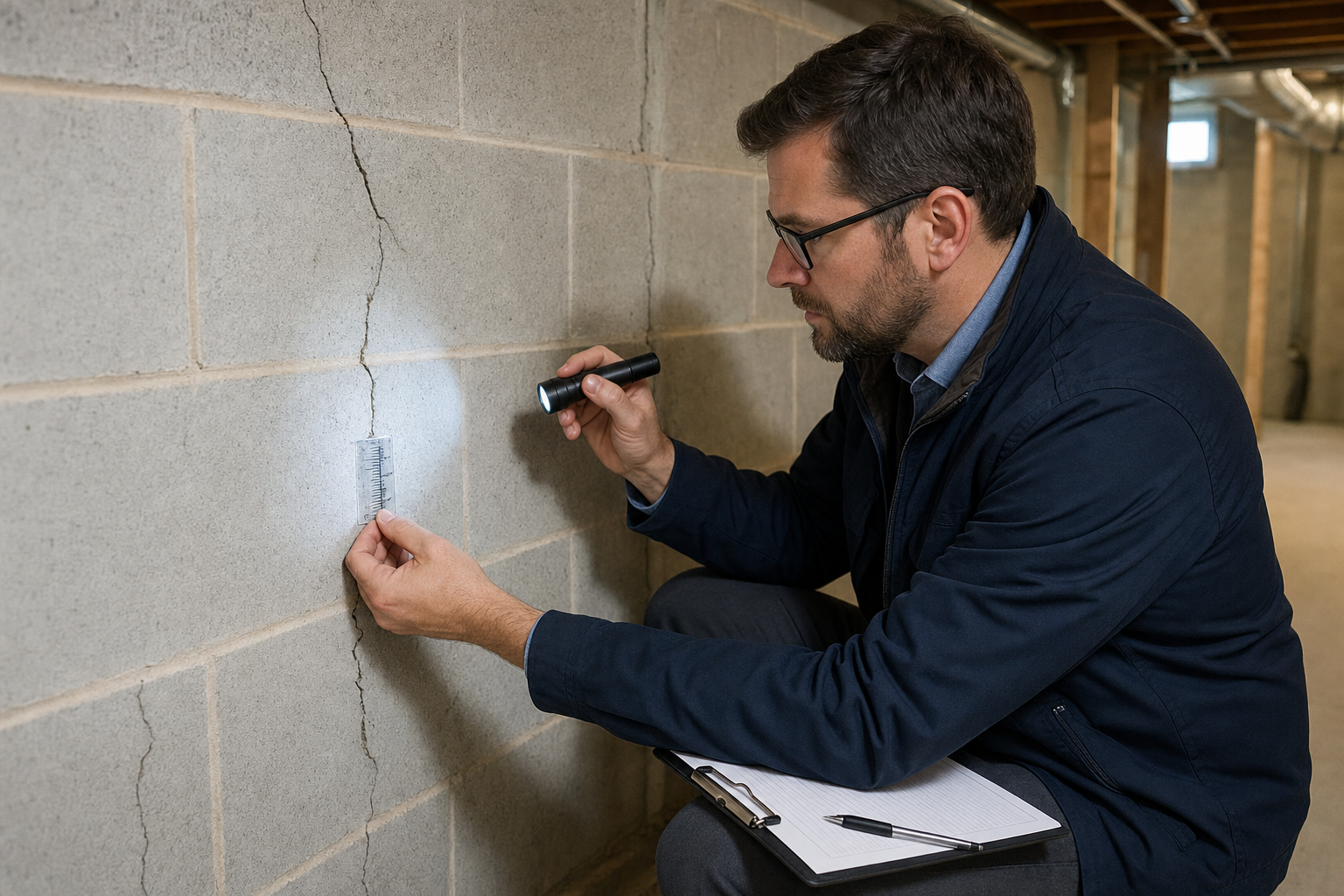
During a structural foundation inspection, the engineer examines each crack for type, orientation, length, width at multiple points, and whether one face is offset from the other. They assess whether the crack is active or dormant. They also review exterior drainage conditions, evidence of water infiltration, signs of prior repair, and any related symptoms in the structure above. See structural inspections for the broader inspection service.
What the Written Report Includes
The structural engineer's report documents each finding with photographs, assigns a severity classification, explains the likely cause, and recommends a course of action. The report is signed and stamped by the engineer and can be shared with lenders, insurers, contractors, and legal representatives.
Toronto-Specific Considerations
Toronto's glacial clay soils expand when wet and shrink when dry, producing seasonal movement cycles that promote foundation cracking over time. Properties near ravines or with poor drainage are more prone to hydrostatic pressure that drives horizontal cracking. Toronto's pre-1960 housing stock includes rubble stone, brick masonry, and unreinforced concrete block foundations that require an engineer with experience in older Toronto construction to assess correctly.
What to Do Next
- Document any visible cracks with photographs and measurements as a baseline.
- If you see a horizontal crack, bowing wall, or crack with visible offset between faces, book an engineering inspection promptly.
- For cosmetic-appearing cracks, monitor with pencil-mark dates and book an inspection if you see progression.
- Obtain a written engineering report before authorizing any crack repair work.
When to Call a Structural Engineer
Call immediately if any foundation crack is horizontal or shows inward bowing of the wall. Call within a reasonable time frame if a crack is wider than 6 mm or shows displacement, water is entering through a crack, or you are buying or selling a home with foundation concerns.
Frequently Asked Questions
Q: Can a home inspector tell me if my foundation crack is a structural problem?
No. Home inspectors can observe and document cracks, but they are not licensed to provide an engineering opinion on severity, cause, or repair requirements.
Q: How long does a foundation crack inspection take in Toronto?
Most residential foundation inspections take one to three hours on site, depending on property size and the number of concerns. The written report typically follows within a few business days.
Q: Does every foundation crack in Toronto need professional repair?
No. Many foundation cracks are cosmetic and can be monitored or sealed without structural repair. The engineer's assessment tells you which category your crack falls into.
Q: Can I seal a foundation crack myself before getting an engineering assessment?
It is better to get the assessment first. Sealing a crack before it is assessed can obscure evidence of active movement and changes the surface appearance that helps the engineer classify severity.
Q: What does a foundation crack inspection report cost in Toronto?
Fees vary by property size and scope. Request a free quote for project-specific pricing.
Concerned about cracks in your Toronto foundation? Get My Free Quote for a professional structural assessment and written report.