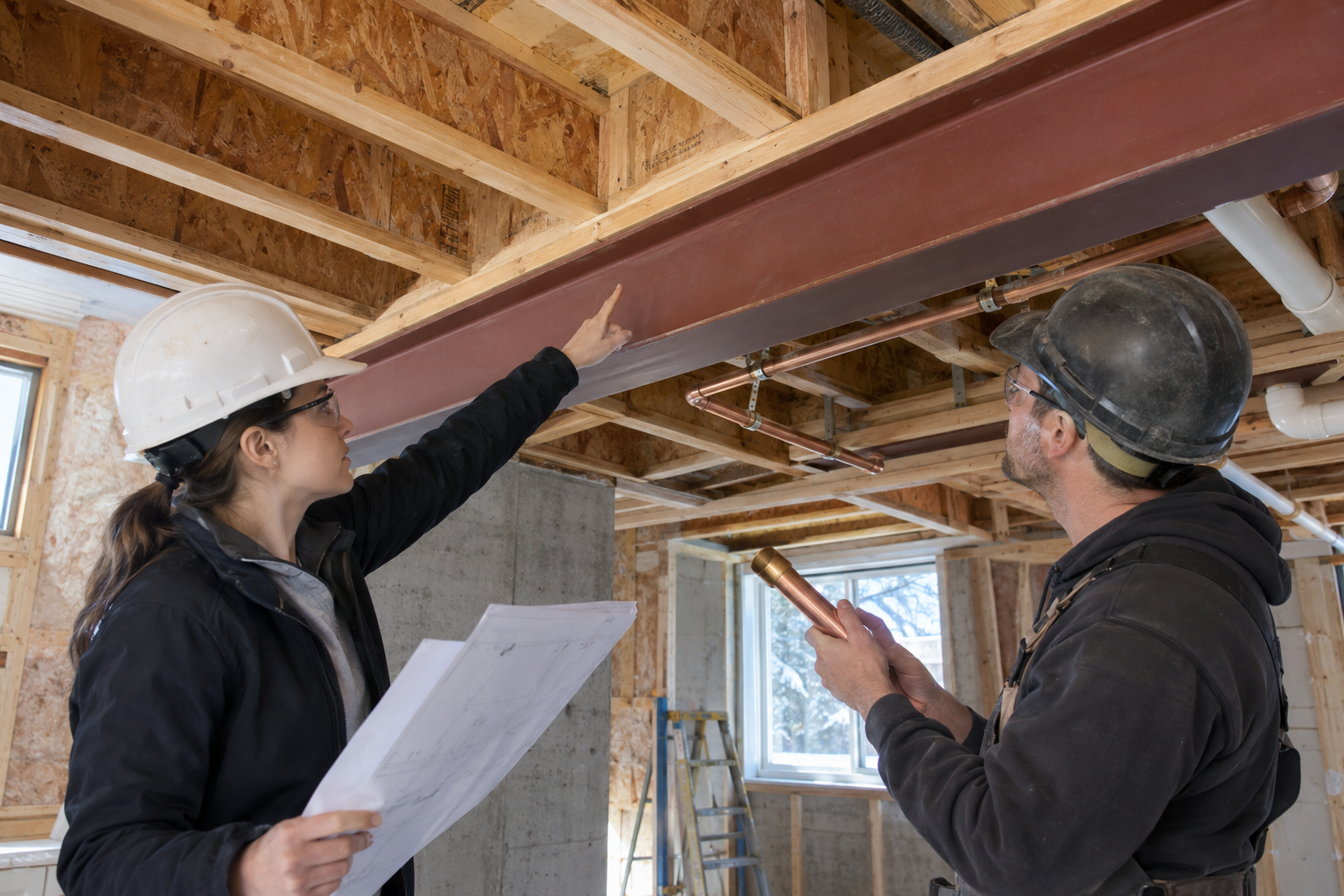

Is An LVL Beam Or Steel Beam Better For A Toronto Renovation?
Is An LVL Beam Or Steel Beam Better For A Toronto Renovation?
Neither LVL nor steel is automatically better for a Toronto renovation. LVL beams are common, easier to work with, and cost-effective for many residential openings. Steel beams can be better for longer spans, shallower depth, heavier loads, or tight headroom, but they need careful connection and installation planning.
For Toronto homeowners, the first useful answer is what the proposed work changes inside the house. Drywall can hide joist direction, old headers, masonry, posts, previous openings, and basement supports that affect the answer.
This article covers LVL versus steel beam selection, installation tradeoffs, headroom, cost, and engineering design. Use it to make the next step clearer before you cut, order materials, submit a permit package, or ask a contractor to price the job.
When LVL Makes Sense And When Steel Does
Start by confirming what the work affects: framing, masonry, foundations, roof or floor loads, bearing points, and permit requirements. The answer should be based on the actual house, not a rule of thumb or a contractor guess from finished surfaces.
If there is active movement, cracking, sagging, water infiltration, unsupported framing, or demolition already underway, pause before covering anything. If the project is still in planning, clear photos and a focused site review are usually enough to decide whether you need drawings, an inspection report, or a more detailed design.
Why The LVL Vs Steel Choice Depends On The House
LVL is often easier for residential crews to handle and connect to wood framing. Steel can be the better choice when the span is longer, the beam has to stay shallow, or the load is too high for a practical LVL depth.
In Toronto renovations, the final choice is often shaped by ceiling height, delivery access, how the beam will be lifted into place, whether posts can be hidden, and how the beam connects to old framing, masonry, or new supports.
How Engineers Compare LVL And Steel
The engineer compares strength, deflection, bearing, stability, vibration, depth, installation access, and how the member will connect to the existing structure.
For choosing an LVL or steel beam for a Toronto renovation, the review usually includes:
- the existing wall, beam, foundation, or framing condition
- the loads above and how they travel down through the house
- nearby openings, posts, joists, masonry, stairs, or basement supports
- whether Toronto Building will need stamped drawings or reviewer responses
- access for the contractor and whether temporary support is needed
The point is not just to say yes or no. The point is to decide what action makes sense: no structural work, monitoring, a written report, stamped drawings, a beam or lintel design, foundation repair, permit support, or a revised renovation plan.
Beam Choice Problems That Affect Construction
Some structural concerns can wait for normal planning. Others should be reviewed quickly, especially when loads, foundations, masonry, or permit compliance may be involved.
- new or widening cracks near the work area
- sagging floors, ceilings, rooflines, beams, or headers
- posts, walls, or foundations that appear to have moved
- water entering near foundation openings or cracks
- previous renovations with no drawings, permits, or inspection records
What To Confirm Before Choosing The Beam
Start with clear photos, any existing drawings, and a short description of what you want to change or what concern you have. The more specific the question, the more useful the engineering review will be.
Try to photograph the full room, the area above and below the concern, the basement or crawlspace support if accessible, and any exterior conditions. Do not open, cut, shore, or cover structural work unless the scope is understood and the right professional has reviewed it.
LVL And Steel Beam Design For Toronto Renovations
Toronto Structural Engineers focuses on practical residential engineering for homeowners, renovators, property owners, and contractors. The scope may include structural inspections, structural renovations, house modifications, structural drawings, structural foundations, municipal reviews, or code compliance depending on the project.
Before drawings or recommendations are issued, the engineer looks at the existing house, the proposed work, the likely load path, and the documentation needed for construction or permit review.
Beam Material Mistakes To Avoid
- assuming the answer is obvious from finished drywall
- getting contractor pricing before the structural scope is clear
- starting demolition before the load path is understood
- forgetting to keep drawings, reports, permits, and photos for resale
Related Guides For Beam Selection And Wall Removal
For related planning, see removing a load-bearing wall in Toronto, residential structural engineering costs in Toronto, and how engineers confirm whether a wall is load bearing.
LVL Vs Steel Beam FAQs
Does this always need a Toronto building permit?
Not always, but permits are common when work changes structure, exterior openings, foundations, use of space, or fire and life safety. Confirm the exact scope with Toronto Building permit guidance or a licensed structural engineer.
Can a contractor handle this without an engineer?
A contractor can build the work, but engineering should be used when the question affects load paths, structural safety, permit drawings, or documentation for resale and insurance.
What should I send before a structural review?
Send photos, sketches, existing drawings if available, the property address, the proposed scope, and any permit comments or contractor questions.
Compare Beam Options For Your Toronto Renovation
If you are unsure what your home needs, Toronto Structural Engineers can review the condition, explain the practical options, and provide a clear next step for choosing an LVL or steel beam for a Toronto renovation. You can request a free structural engineering quote before demolition, permit submission, or construction scheduling.