
Do I Need a Structural Engineer to Remove a Load-Bearing Wall in Toronto?
Yes, You Always Need a Structural Engineer
Removing a load-bearing wall in Toronto always requires a licensed structural engineer. There are no exceptions. The engineer confirms the wall is load-bearing, calculates the loads it carries, designs the replacement beam, and produces the stamped drawings that Toronto Building needs before issuing a permit. This is not a discretionary step, it is a legal requirement under the Ontario Building Code and Toronto Building's permit process. Homeowners who proceed without an engineer risk stop-work orders, unsafe conditions, and serious complications when selling the property.
Key Takeaways
- A structural engineer is legally required for any load-bearing wall removal that triggers a building permit in Toronto.
- The engineer confirms load-bearing status, sizes the beam, and produces stamped drawings.
- Toronto Building will not issue a permit for wall removal without stamped structural drawings.
- Starting demolition before a permit is issued creates legal and safety risks.
Table of Contents
- Yes, You Always Need a Structural Engineer
- What a Structural Engineer Does for Wall Removal
- How the Engineer Sizes the Replacement Beam
- The Permit Process for Wall Removal in Toronto
- What Happens Without Engineering
- Toronto-Specific Considerations
- What to Do Next
- When to Call a Structural Engineer
- Frequently Asked Questions
What a Structural Engineer Does for Wall Removal
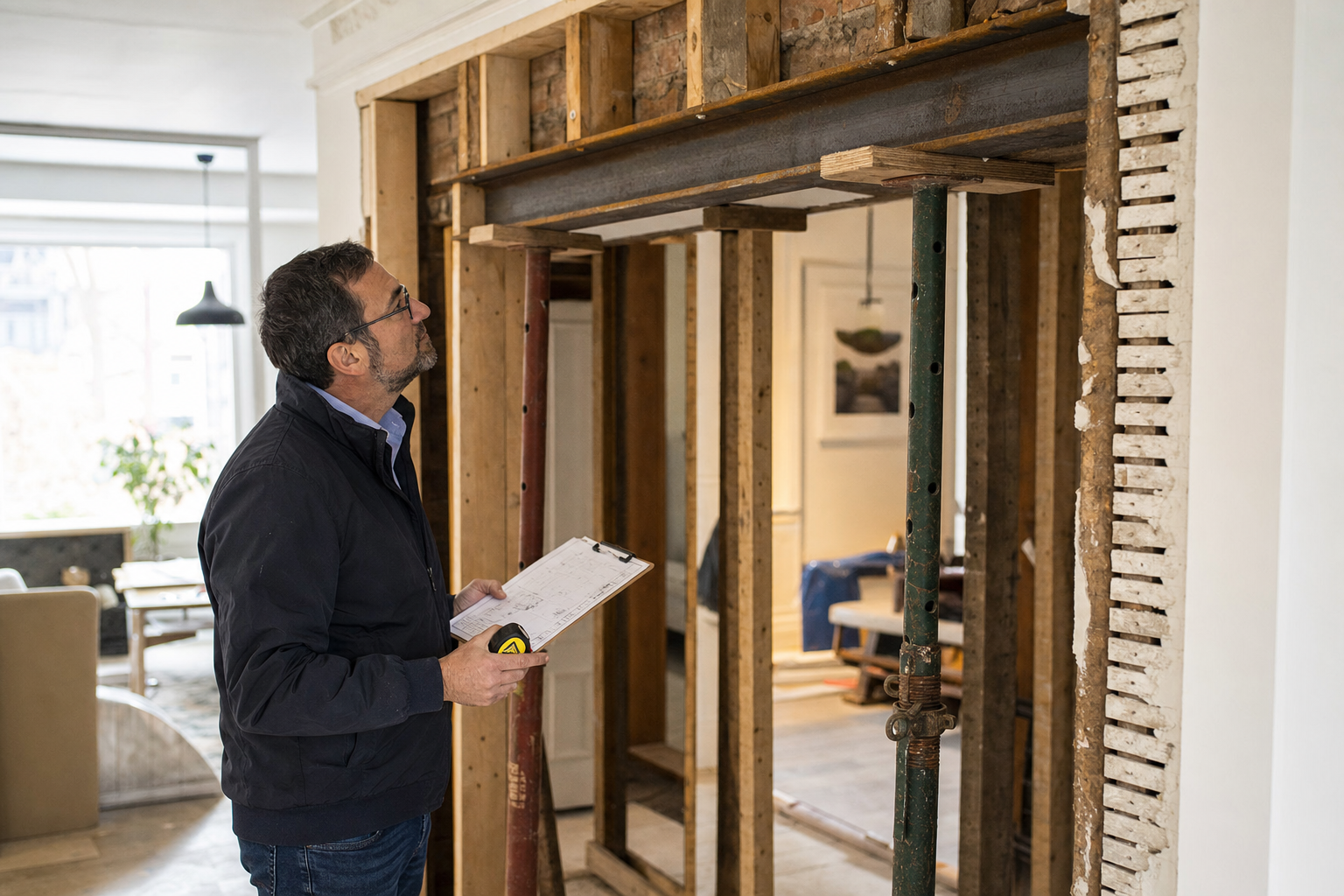
The engineer's role begins before any demolition. They visit the site, review the framing above and below the wall, trace the load path from the roof through the floors to the foundation, and confirm with certainty whether the wall carries structural loads. Visual indicators give contractors clues, but only an engineer can make a definitive determination backed by professional liability.
Once load-bearing status is confirmed, the engineer calculates the tributary area of load the wall supports, selects the appropriate beam type (LVL, steel, or dimensional lumber), sizes it for the span, and designs the posts and connections at each end. See structural drawings for what a complete package includes, and structural renovations for how the firm handles these projects.
Stamped Drawings for the Permit
The engineer documents all of this in stamped structural drawings submitted to Toronto Building as part of the permit application. The drawings show the beam size, species and grade, bearing length on each post, post dimensions, and any footings or column reinforcement needed to carry the new concentrated load to grade.
How the Engineer Sizes the Replacement Beam
Beam sizing is not guesswork. The engineer calculates the total load carried by the wall, including dead loads (building weight) and live loads (occupancy and snow), and distributes that load over the proposed beam span. The beam must support the load without exceeding the allowable stress of the chosen material and without deflecting more than the OBC limit (typically L/360 for floors, L/240 for roofs).
For a typical Toronto semi-detached home, a single-storey wall removal spanning 3 to 4 metres commonly results in a multi-ply LVL beam. Longer spans, multi-storey loads, or heavy roof loads may require a deeper LVL, a steel W-section, or a parallel-chord truss. The engineer specifies the exact member the contractor must install.
The Permit Process for Wall Removal in Toronto
- Engage a structural engineer for site assessment and beam design.
- Receive stamped structural drawings (typically within a few days to two weeks).
- Submit permit application to Toronto Building including structural drawings and the completed application form.
- Receive permit approval.
- Install temporary shoring before demolition begins.
- Remove wall and install beam per the approved drawings.
- Schedule required framing inspection before drywalling.
- Receive final inspection sign-off and permit closeout.
Homeowners should confirm specific permit requirements for their project with Toronto Building or a licensed Professional Engineer, as scope and requirements vary.
What Happens Without Engineering
Removing a load-bearing wall without engineering and a permit in Toronto creates cascading problems. The floor or roof above loses support, leading to deflection, cracking, and in severe cases structural failure. Toronto Building can issue a stop-work order, require the wall to be reinstated at the owner's cost, and impose fines.
Toronto-Specific Considerations
Toronto's semi-detached and row homes, particularly those built before 1960, frequently have interior load-bearing walls that are masonry rather than wood-framed. A brick or block interior wall requires a lintel over any opening rather than a conventional wood or LVL beam. Confirm with Toronto Building or your engineer for your specific project. See house modifications for additional context.
What to Do Next
- Do not begin any demolition before confirming whether the wall is load-bearing.
- Engage a structural engineer for a site assessment and beam design.
- Submit the permit application before any structural work starts.
- Ensure your contractor installs temporary shoring before wall removal begins.
- Schedule the required city framing inspection before closing in drywall.
When to Call a Structural Engineer
Call a structural engineer before you remove or open any wall, finalize a renovation design that involves wall changes, or accept a contractor quote that does not mention engineering or permits. Request a free quote from Toronto Structural Engineers to get started.
Frequently Asked Questions
Q: Can my contractor confirm a wall is load-bearing without an engineer?
Experienced contractors can identify likely load-bearing walls based on framing clues, but only a licensed structural engineer can confirm load paths analytically and provide the stamped drawings that Toronto Building requires for a permit.
Q: How long does it take to get structural drawings for a wall removal in Toronto?
For a defined, straightforward wall removal scope, stamped drawings are typically ready within a few business days to two weeks after the engineer's site visit, depending on project complexity.
Q: How much does it cost to have a structural engineer design a beam for a wall removal?
Fees vary by scope. A single beam design for one opening is one of the simpler residential engineering engagements. Request a free quote for project-specific pricing.
Q: Do I need shoring during wall removal?
Yes. Temporary shoring supports the structure above while the existing wall is removed and the permanent beam is installed. Your contractor installs shoring before demolition starts, following the engineer's notes on the drawings.
Q: What if Toronto Building asks questions about my structural drawings?
Your engineer of record answers technical questions from the permit office and issues revised drawings if required by the reviewer. This is part of the engineer's responsibility under the engagement.
Ready to open up your Toronto home? Get My Free Quote from Toronto Structural Engineers before any walls come down.