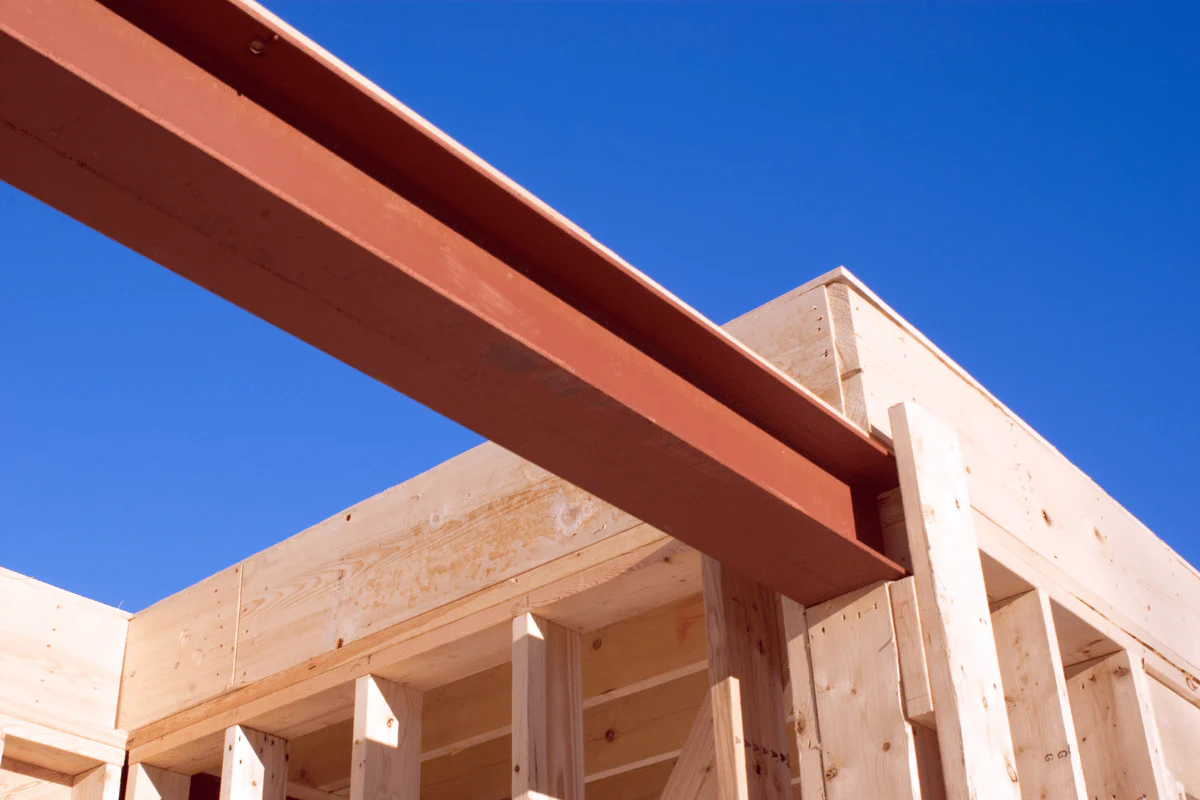
Removing a wall or building an addition? An undersized steel beam means sagging floors, cracked drywall, and failed inspections. We deliver precise, stamped steel beam design — sized right the first time, code-compliant, and permit-ready.
When you remove a load-bearing wall, span a wide opening, or add a storey, the loads that wall or floor carried have to be redirected safely to the foundation. For long spans and heavy loads, a steel beam — typically a wide-flange W-section — is the strongest, shallowest solution available. But a steel beam is only as good as the engineering behind it: the load calculations, span analysis, connection details, and the stamped design from a licensed structural engineer.
Toronto Structural Engineers provides steel beam design for homeowners, contractors, and builders across Toronto, ON. We calculate the actual loads for your specific project, specify the correct steel section, design the supporting columns and footings, detail the connections, and produce permit-ready drawings stamped by a licensed Professional Engineer.
Steel is chosen precisely for the jobs other materials can't do — the widest openings, the heaviest loads, the situations where headroom is tight and beam depth must stay shallow. That makes correct engineering even more critical, because steel beams are usually carrying the loads where failure has the largest consequences.
The risks of skipping proper steel beam engineering:
The benefit of professional steel beam design is a member sized to the real loads, connections and bearing detailed correctly, and documentation that satisfies both the building inspector and the next buyer's home inspector.
You likely need a steel beam designed and engineered if you are:
If you're unsure whether a wall is load-bearing, that question alone is reason to have an engineer assess it before any demolition begins.
Steel offers several section types and configurations, each suited to different loads and installation conditions. We design and specify across all common residential and light-commercial steel applications.
Every steel beam design includes the bearing and connection details — bearing plates, column base plates, anchor requirements, and the complete load path to a footing capable of carrying the reaction. A steel section specified without its connections and load path is only half-engineered.
Proper steel beam design is a calculation, not a lookup from a generic span table. Several factors drive the result:
These inputs are run through engineering analysis (to CSA S16 and the Ontario Building Code) to determine the steel section, the columns, and the footings that support it. A beam that works in one house may be wrong for the one next door — the loads are specific to each structure.
We discuss your project — the wall or opening involved, the renovation or addition scope, your timeline, and whether a permit is required — so we can scope the engineering accurately.
A licensed engineer inspects the structure on site, confirms whether the wall is load-bearing, traces the load path above and below, measures spans and framing, and assesses the existing foundation and bearing points.
We calculate the dead, live, and snow loads the beam must carry, determine tributary areas, account for point loads, and establish the design loads that drive the steel section selection.
We size the steel section, design the supporting columns, verify the footings, and detail every bearing plate, connection, and the complete load path to the foundation. Where more than one solution works, we explain the trade-offs — cost, depth, weight, installation difficulty — so you can choose with full information.
We produce permit-ready engineering drawings showing the beam specification, column and footing details, bearing and connection details, and load notes — stamped by a licensed Professional Engineer and formatted to the City of Toronto's submission standards. We support the permit submission and respond to any plan-review comments.
Experienced, licensed engineers. Our steel beam designs are prepared and stamped by Professional Engineers licensed in Ontario, grounded in load analysis and CSA steel design standards rather than rules of thumb.
Ontario Building Code expertise. Every design meets OBC and CSA S16 requirements for strength, deflection, and load paths, and is formatted to satisfy Toronto's plan reviewers the first time.
Deep local knowledge. We work in Toronto's housing stock every day — century homes, post-war bungalows, semis, and modern builds — and understand how each carries load and how local foundation conditions affect steel bearing design.
Clear communication. We explain whether your wall is load-bearing, why steel is or isn't the right choice, and what each option costs and involves — in plain language.
Fast turnaround. Renovation timelines are tight. We respond quickly, schedule inspections promptly, and deliver stamped drawings without unnecessary delay.
Customer-focused. We design for your project specifically — never a generic template with the address swapped — so you get engineering you and your contractor can build on with confidence.
Yes. The City of Toronto requires engineer-stamped structural drawings to obtain a permit for installing a steel beam, such as when removing a load-bearing wall. The engineer sizes the beam, designs the supporting columns and footings, and details the connections. Installing a steel beam without proper engineering risks sagging, failed bearing, and a rejected inspection.
Steel is the better choice for long spans, heavy loads, and openings where beam depth must stay shallow to preserve headroom. Engineered wood (LVL) is often more cost-effective and easier to install for moderate spans. We recommend the right material based on your span, loads, and site conditions.
Cost depends on complexity — a single steel beam for one wall removal is straightforward, while a multi-beam addition involves more analysis. Pricing reflects the site inspection, load calculations, connection design, and stamped drawings. Contact us for a free quote specific to your project.
Walls running perpendicular to floor joists, sitting above a beam or foundation wall, or supporting loads above are typically load-bearing — but it isn't always obvious from inside the room. Have a structural engineer assess it before any demolition. Guessing wrong is dangerous and expensive.
For a typical single-beam project, turnaround is often a few business days after the site inspection. Larger or more complex projects take longer. We prioritize fast, accurate delivery because your renovation schedule depends on it.
Yes. Steel concentrates large loads at its bearing points, so the design must include adequate bearing plates, columns or posts, and footings sized to carry the reaction. We detail the complete load path from the beam down to the foundation as part of every design.
Yes. Our drawings are stamped by a licensed Professional Engineer and formatted to Toronto's submission standards, including the load analysis and connection details plan reviewers look for. We also support the permit application and respond to any review comments.
We assess the existing beam, calculate the loads it should be carrying, and determine whether it needs reinforcement or replacement. We then design the correct solution and provide stamped drawings if a permit is required. Visible sag or bouncing floors should be assessed promptly, as the condition tends to worsen.
A correctly engineered steel beam is what lets you open up wide spaces, carry heavy loads, and add square footage without inheriting sagging floors, cracked walls, or permit trouble. The calculations have to match your structure's real loads — not a generic span table — and the connections and bearing have to be detailed to carry the reaction safely to the foundation.
Toronto Structural Engineers provides steel beam design that is specific to your project, grounded in load analysis, and delivered in stamped, permit-ready drawings. We respond quickly, explain your options clearly, and engineer steel beams you and your contractor can build on with confidence.
Contact us today for a free quote or to discuss your project. Let's make sure the steel carrying your home is engineered to do exactly that.